
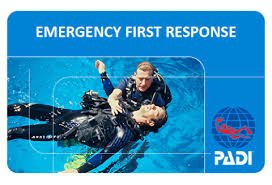
The Emergency First Response (EFR) course is one of the foremost international CPR and first-aid training programs. It focuses on building confidence in lay rescuers and increasing their willingness to respond when faced with a medical emergency.
While EFR is a mandatory prerequisite for the PADI Rescue Diver course and professional diving ratings, it is completely dry (no diving required) and open to anyone—divers and non-divers alike.
1. Prerequisites & Duration
Minimum Age: None. It is open to adults and children alike, provided they can understand and perform the physical skills.
Prerequisites: None. No prior medical knowledge or scuba certification is required.
Duration: Typically completed in 1 day (around 5 to 8 hours, depending on group size).
2. Course Structure & Key Skills Learned
The course follows standard, internationally recognized medical guidelines for emergency care and is split into two primary segments:
Phase 1: Primary Care (CPR)
This section teaches you how to respond to life-threatening emergencies. You will learn and practice:
Scene Assessment & Barrier Use: Ensuring your own safety before helping and using gloves/ventilation masks to prevent disease transmission.
CPR (Cardiopulmonary Resuscitation): Chest compressions and rescue breaths for adult, child, and infant casualties.
Airway Management: Handling choking victims.
Serious Bleeding Management: Using pressure bandages and tourniquets.
Shock & Spinal Injury Management: Keeping a patient stable and safe.
AED Deployment (Optional but standard): Learning how to set up and use an Automated External Defibrillator.
Phase 2: Secondary Care (First Aid)
This section focuses on medical situations that are not immediately life-threatening but require stabilizing care until emergency medical services (EMS) arrive:
Injury Assessment: Conducting a head-to-toe physical evaluation of an injured person.
Illness Assessment: Identifying medical signs and symptoms.
Bandaging & Splinting: Managing cuts, scrapes, dislocations, and bone fractures.
Basic Medical Events: Handling burns, allergic reactions, heat exhaustion, or stings.
3. How Learning Happens
The course is built around a hands-on, relaxed learning environment. Students watch instructional videos, review a workbook, and spend the majority of their time physically practicing skills on medical mannequins and participating in simulated, real-life emergency scenarios with other classmates. A straightforward, multiple-choice quiz completes the certification.
4. Certification Validity
An official, internationally recognized EFR certification card is issued upon completion.
The certification is valid for 2 years (24 months), after which a short “Refresher” course is required to keep skills sharp and stay updated on the latest medical guidelines.


James –
Honestly this EFR course was on a whole other level! I thought it would be just theory but the trainers here made everything so practical and engaging I learned how to handle real-life situations and now I feel way more confident in the water The vibe at Blue Planet is just great you really feel at home If you’re thinking about taking this course don’t hesitate, you’re in safe hands